UX case study · 3 min read
Infusionsoft Marketplace
- Time frame
- 2013–2018
- Company
- Infusionsoft
- Discipline
- UX / UI
Executive summary
Refocusing an app marketplace on business goals after testing showed that leading with tools slowed people down.
- <1 weekTo launch a first campaign, down from 2–4 weeks
- ~50%Estimated increase in small business adoption
- 2xSupport teams recommending marketplace tools
The challenge
Infusionsoft’s marketplace connected small business owners with apps, integrations and prebuilt marketing campaigns created by partners and internal teams. Our first version was positioned on tools at the forefront, so business owners had to already know what they were looking for. Most of them knew their goal, like getting more leads or following up with customers, but not which tool would get them there.
The marketplace let small business owners search a growing library of 300+ integrations and ready-made campaigns from partners and internal teams. The goal was to help them find the right tool fast and put it to work.
My role
My role: Design lead. I owned research, UX and UI from discovery to launch.
Team: 4 people: me, a product manager, a front-end developer and an engineer.
Research
User testing showed that leading with tools slowed people down. Small business owners think in terms of goals, such as getting more leads or getting paid faster, not in terms of software categories.
Research
- Interviews: 10 small business owners, to shape the first concept
- Usability testing: 7 participants, to choose the final direction
- Evaluation: quantitative and qualitative data, to measure what worked
Key findings
- The value wasn’t clear. Owners couldn’t see how a tool would help their business.
- The purpose wasn’t clear. Tool names and descriptions didn’t explain what each tool did.
- Owners didn’t know what to search for. Without guidance, they couldn’t find solutions.
- Listings were inconsistent. Partner and support teams needed help writing clear, useful listings.
Insights to decisions
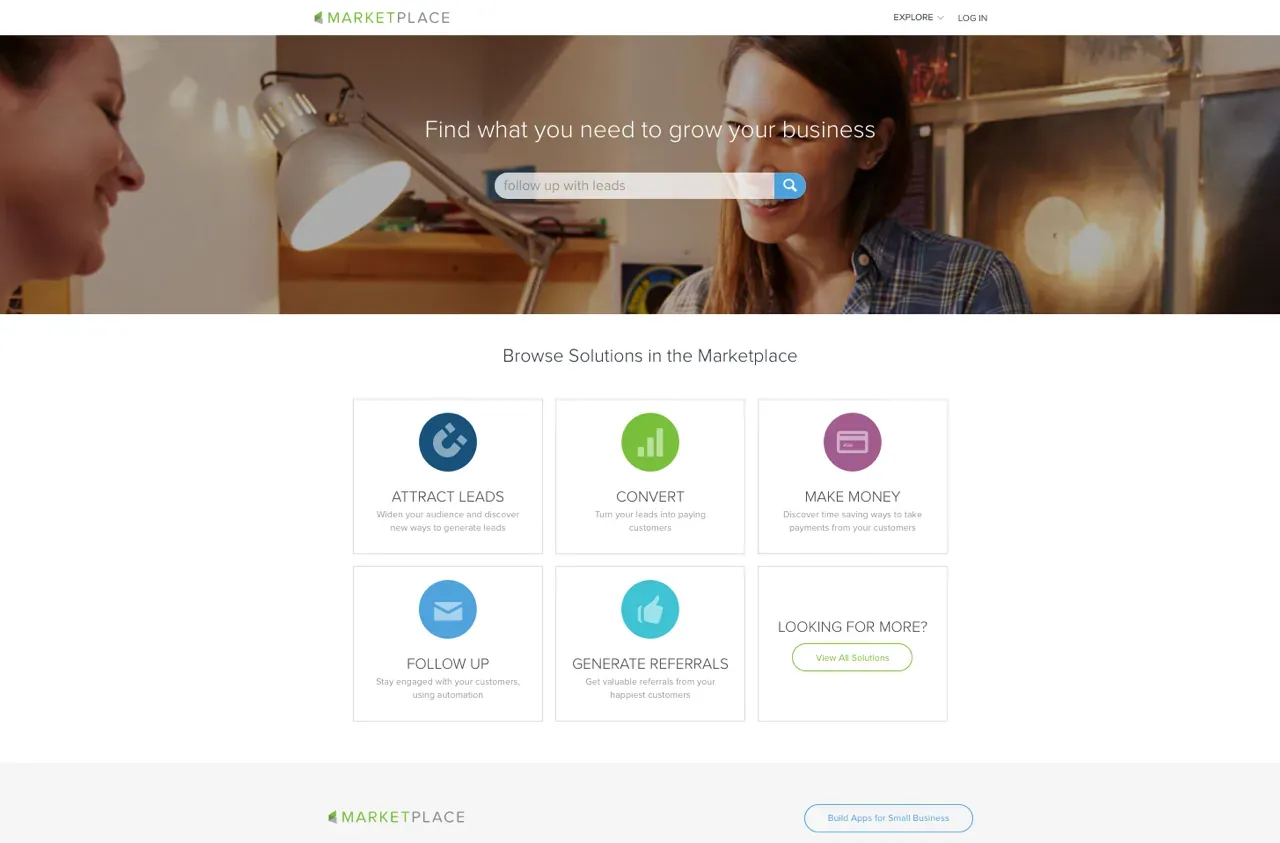
- People shop by goal, not by tool. We rebuilt the homepage and navigation around business goals: attract leads, convert, make money, follow up and generate referrals.
- The value and purpose weren’t clear. Each goal now explains, in plain language, how it helps the business before any tool is named, and listing cards lead with what the tool does, then show price and user ratings so owners can compare at a glance.
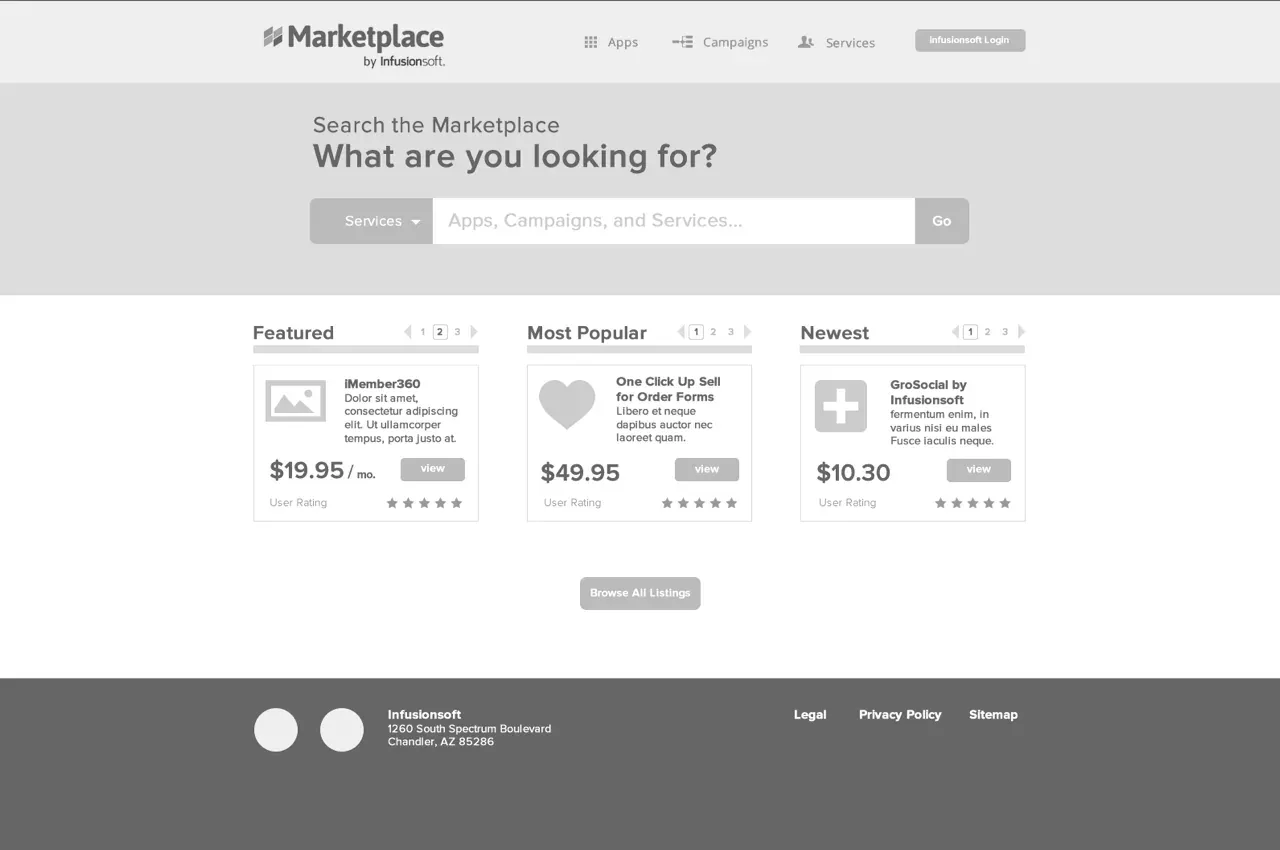
- Owners didn’t know what to search for. Search moved to the top of the page with goal-based prompts like “Follow up with leads,” and Featured, Most Popular and Newest lists give people a place to start.
More insights
Listings were inconsistent. We gave partner and support teams a templated submission form, so every listing answered the same questions in the same order. A new QA review checked each one for clarity before it went live.
Design process
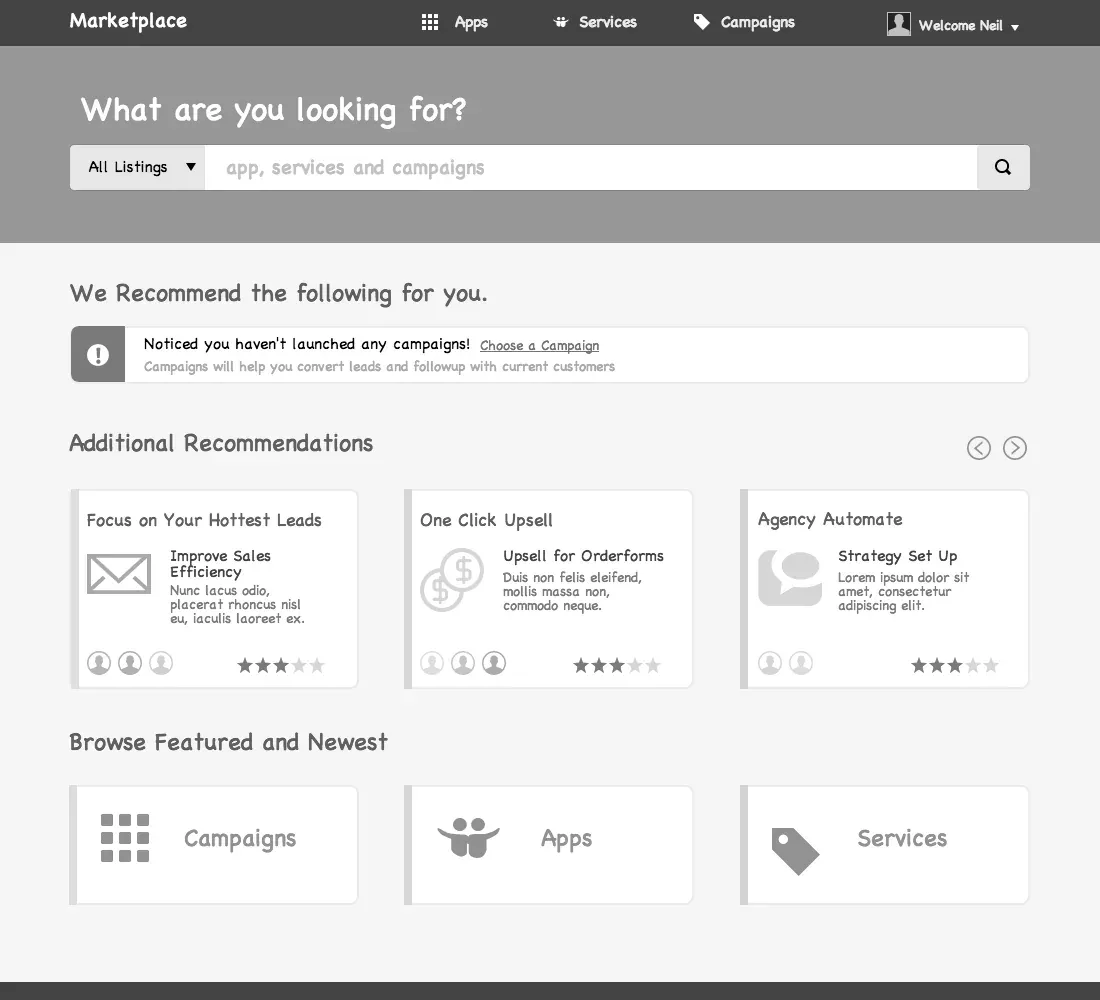
I moved from low to high fidelity in four steps, testing with owners along the way so each round answered a specific question.
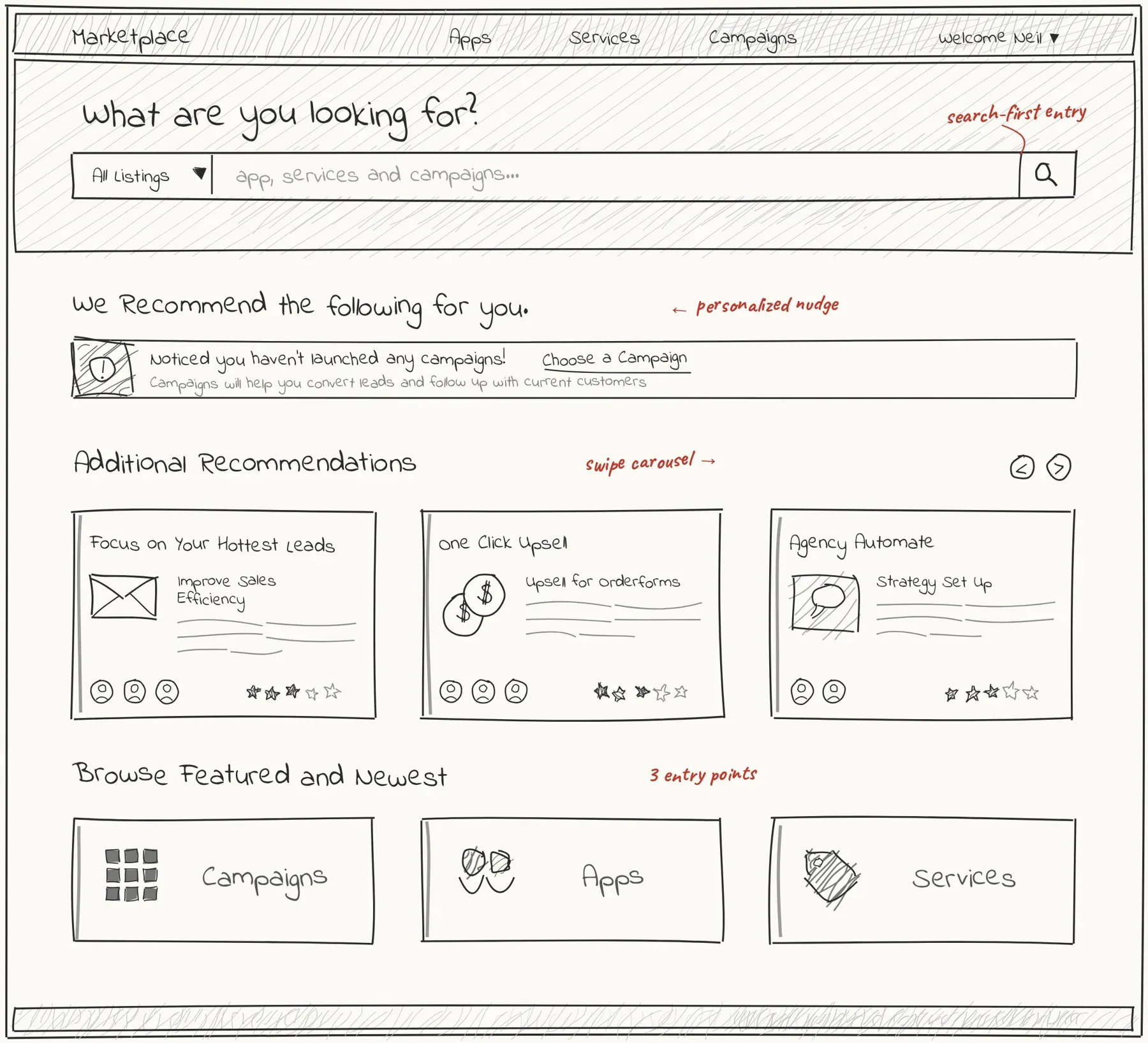
- Sketches: 10 owner interviews shaped quick, annotated sketches that served as a proof of concept, so we could test the core idea with owners and stakeholders before committing to wireframes.
- Wireframe 1, personalized: it tested whether the marketplace could recommend tools based on what owners hadn’t set up yet.
- Wireframe 2, goal-focused search: it tested a large “What are you looking for?” search bar that let owners start from the outcome they wanted, backed by Featured, Most Popular and Newest lists to guide them to the right tool.
- Final design: after usability testing with 7 owners, it combined what worked: a plain-language search prompt (“Find what you need to grow your business”) and goal tiles for leads, conversion, sales, follow-up and referrals.
Outcome
What shipped
A goal-focused marketplace with plain-language search and goal categories. Every listing was tagged to a goal, so owners could browse by what they wanted to achieve.
Results
- ~50% more adoption: an estimated increase in small business owners using marketplace tools
- 2x support recommendations: support teams’ use of the marketplace to recommend tools roughly doubled
- Under 1 week to launch: owners who once took 2–4 weeks of support calls to launch a first campaign, or never launched one, now got there in under a week
- Fewer support calls: owners could find and set up solutions on their own
Reflection
Users didn’t want tools. They wanted outcomes.
When we designed around their goals instead of our catalog, users found the right solution that allowed them to launch in days instead of weeks.
Process and screens